



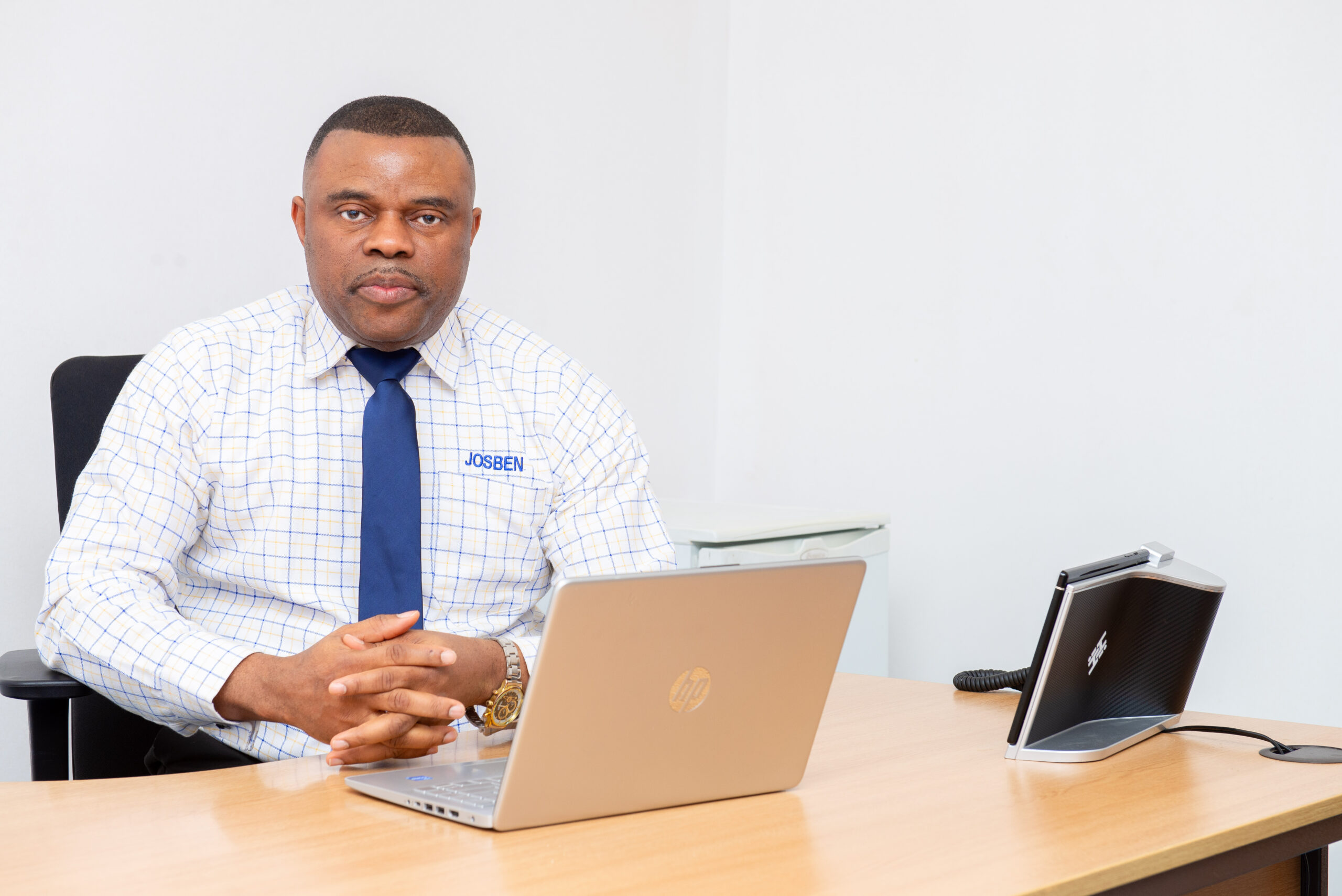
EXCLUSIVE INTERVIEW WITH THE FOUNDER OF INSIGHT HIGHER EDUCATION, UK
Anchored by Daniel Logue
Correspondent
Centre For Educational Research and Development
JOSBEN International College, UK
[Daniel]
I’m here today with Dr Joseph Akpan, Provost of Josben International College, UK who is also The Founder, Insight Higher Education Magazine. We’re here to talk about your upcoming publication, Insight Higher Education Magazine. So, before we get into that, Joseph, tell me a bit about your background in higher education.
[Joseph]
OK, thank you, Daniel.
I had my undergraduate education in Nigeria and then proceeded to postgraduate same in Nigeria. Due to delays in the same as at then, I had an opportunity that came in from the UK and had to move here to do all my postgrad and some professional studies.
[Daniel]
Tell me more about how the Josben International College brand came about?
[Joseph]
At JOSBEN, we have institutions in Nigeria and in the UK. The vision started in Nigeria, incubated at the University of Lincoln, UK. Entrepreneurship was compulsory part of the MBA programme as at that time. At the business school, we were tasked with producing a real-life business project that we would be able to pitch and get ourselves engaged in, in a real-world context.
This project was where I really developed my entrepreneurial instincts, and so I’m just literally living that dream I had. It’s amazing today to be alive and to witness how all those dreams now coming to life.
So, we have JOSBEN operations in Nigeria, and the college here in Cambridgeshire. I remember when I lost my PhD supervisor to cancer, and I had to take a break. I moved back to Nigeria as a volunteer intern at the Central Bank of Nigeria (CBN). It was while I was at the CBN that I became engaged with the Nigerian higher education system. I taught part time at a few university centres as at then in Abuja.
The opportunity I had to teach in these universities on a part-time basis, afforded me insight into the way higher education is run. While on vacation at home another time, it was so worrying to see the problems I faced while teaching there quite a while ago. I was asked questions by a few colleagues on what could be done to ease academic practitioners’ burden. How could practitioners at home get to understand the best practices used in day-to-running of the higher education? Few students I interacted with also share their concerns. That was what brought about the idea for this publication.
[Daniel]
So let’s talk more about the publication – Insight Higher Education Magazine. What else inspired you to set up this publication?
[Joseph]
OK, like I rightly said earlier, my involvement in teaching and supporting learning in the higher education and being close to students made me see clearly what the issues are and as a professional higher education practitioner here in the UK, I started thinking about how to address these issues.
Also, I remember vividly, while I was at the Central Bank, I visited the library and I requested to read a higher education paper as an academic. I searched the whole library there, and there was nothing specifically published that would be a one-stop publication for academics or higher education community. I visited a few libraries in some part of the country during my visit and there was still none. In the UK or in the US you would be able to find one easily such as Times Higher Education. That’s when it became clearer that something has to be done to fill in the gap identified.
Insight Higher Education Magazine is coming at a time when I have had a very good experience both as a lecturer and as a provider of higher education home and abroad!
With my wealth of experience now and with support from my colleagues from other higher educational institutions (HEIs), we now have a better understanding of how higher education operates here and the opportunities and challenges surrounding it.
Remember, there’s no higher education system without problems. But amazingly, the problems Nigerian higher education experiences, often aren’t a problem here in the UK. Conversely, there are problems the UK’s higher education sector experiences are not same in Nigeria’s higher education. It raises the question; how can we create a platform that will provide a solution to both worlds? And this is what Insight Higher Education Magazine is set out to explore.
[Daniel]
To clarify, will your publication be available online, in print or both?
[Joseph]
Initially, we wanted it to be just online. But graciously, the British Library reviewed our proposals and granted permission for our publication to take both forms. We’ve got approval to publish the digital version and the print version. So, it’s both.
[Daniel]
Fantastic! Now, how are you hoping that your publication is going to revolutionise discussions about higher education in Nigeria? And what policy changes could it make?
[Joseph]
OK, as I said earlier on, the Insight Higher Education Magazine is not just a paper. It’s not just a magazine. It has loads of programmes. It has loads of events. It has loads of solution packages that will address different areas of higher education concerns, not just in Nigeria, but in Africa as a whole. And then in the UK, remember, we have a college here – we are a provider of further and higher education. We also experience some issues that needs to be addressed.
So, for our first edition, we are looking at how higher education started because we need to get back to our root and trace to where we are today as country.
We shall look at governance in our next issue for without a governance structure in the organisation, no organisation ation could run smoothly. Our determined focus would be on governance. Not just in Nigeria, or Africa, but in the UK too.
We shall do a comparative analysis of the governance structure. What works and what doesn’t?
And this is why the paper is going to spark academic discourse amongst not only leaders, but also other levels of people within higher education. So indeed, it’s going to revolutionise conversation. It’s going to positive changes in our HE system.
We feel stakeholders will be very happy that this kind of publication has finally come into existence.
[Daniel]
You have mentioned some readers who would be highly interested, for example, higher education leaders. Who else makes up your target audience? And for example, would students benefit from this publication?
[Joseph]
Absolutely, because it is a student friendly, student-centred publication. Let me put it very straight. It is our goal to get the learners to have a total perspective about higher education.
Whether you are studying at home in Africa or studying anywhere around the world, we want to enrich learning experience of these scholars. And that is the bottom line of what you are doing. Whether in learning, teaching or in research, Insight Higher Education has what it takes to inspire these young people or the full grown adults, because higher education cuts across all of these people. We shall strive to have every need satisfied.
[Daniel]
Could you elaborate on which other stakeholders may be attracted to your publication?
[Joseph]
People that would be interested in this publication would be – number one, the very people that are the centre point of this: the students. We have loads of programmes students.
Every student in higher education and in fact, prospective students, will find something useful to them. Before you step into higher education, you need to prepare your mind because higher education life is not secondary school life. So, there will be a section in the paper that is going to be preparing youngsters’ mindsets.
We are creating a forum in the publication to listen to these youngsters. I’ve been a teacher in the UK and – say you asked a student at the end of Year 11, when they’re writing the exams, “What’s next? Are you going to university?” In some schools, more than half of the class will say, “No. University? What for?” To some extent these ones are right because they know apart from the university there are other ways young school leavers could get engaged such as Apprenticeships. This affords them opportunity to acquire skills, earn while learning on the job.
But in Africa, if you ask, say for instance, in Nigeria, any secondary student, “where will you go to when you finish secondary school? Majority answer you that they’re going to university. So, you can see the difference in the two worlds.
Here in the UK, going to university is not primarily what every student really would fancy after secondary school life. But the system here still needs people. And this way, we are coming in to bridge that gap, to balance the probability between the two worlds, to inspire these young people across both worlds.
Because, for instance, if I’m retiring in a years from now, who will take over from me? We must make succession plans and start by preparing the mindset of these young ones for the future.
Continuing students in the university, whatever their field of study: medicine, engineering, business or whatever. They’re going to find it very useful. This publication is coming to address every need.
The skills you need, other than skills specific to your field of work, say employability skills and whatever other skills you need perhaps academic writing or sharpening up your research skill; this publication will aim to address all these needs for these students. If you’re a young graduate, for instance, coming out of university and you’re thinking, “I want to explore the world of opportunities in my country, or beyond the shores of my country. I don’t really know what to do.” You can just email our careers or advice email at Insight Higher Education Magazine. We have advisors who are experts, behind this publication that will respond to you free of charge, reshaping your thoughts. Because all we want to do for people, who want to pass through the world of higher education, is to provide them with the necessary guidance.
I have spoken a lot about student so far. But I would like you to know that policy makers, higher education regulators, higher education administrators and even anyone who is curious about getting an insight on any aspect of higher education would find this publication very resourceful.
[Daniel]
OK, and what kind of revenue streams will this publication have to raise money to sustain its operations? For instance, advertisements?
[Joseph]
Insight Higher Education Magazine comes with loads of opportunities. If you’re not a student, for instance, say you’re a businessperson, and you have passion for higher education, or if you’re a philanthropist and you’ve done something for the world of higher education, or you just feel like you would like to be part of this project – just let us know. You can email us via our partnership email (partnership@insighthe.com) and kindly express your needs to us. The relevant team will talk you through how you can support our publication, and they would also let you what’s in it for you, especially if you are an advertiser. Please, I must say here that we are here for higher education and higher education-related matters; and there would be so many adverts we would not welcome. I am sorry. We are providing solutions to some teething problems in higher education, and I can assure you that there are many organisations and philanthropists who are ready to work with us. So, advertisement is the least source of revenue we are expecting.
[Daniel]
How would you ensure that higher education issues are properly addressed? What structure do you put in place to ensure that this would be sustainable?
[Joseph]
There are lots of issues and misconceptions within higher education that need to be addressed, and Insight Higher Education Magazine is that platform that would draw academic experts and seasoned professionals from around Africa and the world to address these issues.
Getting started; we have put in place a Advisory Board that is made up of Professors who are passionate about addressing these issues. Two out of four Professors are current Vice Chancellors. Our Editorial Team is headed by a Professor well experienced in Communication and Media Studies. As you can see these are issues bothering higher education and we want to make sure that we have the best African brains majorly from around the world to help in this matter. Governance is very important in every organisation, and we take this very seriously.
All we are trying to do here is to create enabling higher education environment for our young people to achieve their academic and career goals. To let them know that they’re not alone on their higher education journey – to let them know that they are the ones the world tomorrow is looking for. They’re going to be our successors. They are the ones who will change narratives around the world, so this is sure to be a unique and influential publication.
[Daniel]
Describe your plan to distribute the publication and to increase its readership.
[Joseph]
OK, before we go into distribution, let’s talk about the editorial process – the quality assurance process – because it’s very important here. We have diverse needs of people, and the world of higher education is so massive. I would like to assure you that we have a clearly defined editorial process and seasoned editorial team members. We also have put in place an advisory board who monitors and provide strategic guidance.
And like we’ve rightly said before, we are providing solutions to Africa’s higher education, and we are in the UK where this paper is published. We have other professionals based in different countries and we do have two operational offices in Nigeria. As we progress, we shall have more in other countries. Why are we doing this? We would not like to be far away from our readers and stakeholders.
Now, let talk more about getting to the reach of our readers and other stakeholders globally. This is very important. And today we all know there’s no amount of advertising through television or printing physical copies, will really get to the reach of many especially younger people. But if you leverage technology, as we do in this publication, with just a click of the button, content can go viral.
Remember, youngsters use mobile devices a lot, whether that’s in developing economies or in the advanced world. These youngsters are really tech savvy and so we leverage technology that makes content very appealing to them. And then whether they’re using a mobile device or a laptop or whatever the device they want to use, we can get across to them easily.
And then we still have print because there is a part of the world that prefer this. We did a market survey and many older people said they prefer the print version. They want to hold it in their hands, so for those people, the print version is going to be on a subscription basis, and it will be sent directly to them. We also have the newsletter, a weekly newsletter, for breaking news or hot topics. We know advertisers would like that because the publication, the print one, is a bi-monthly publication. The online digital version could be weekly, it could be daily, and it could showcase any story as it’s happening. So that’s how we plan to leverage technology to reach more people. We also signed up with a distribution company who can distribute the paper in a very reader-friendly manner. It involves turning the paper into like a flipbook to read on the go. It makes it very interactive for those readers who prefer digital version.
So, for instance, if somebody is reading the article from this interview, and they say, “OK, I think I’m getting bored. Can I listen to the voices of the people who said this?” Just a click somewhere on the page there, and with the technology that links you straight to maybe Vimeo or YouTube, you can watch it and then switch back to your reading. How does that sound? Quite interactive. You know, these are the kind of ways we want our audience to experience our publication. People like things differently. Some prefer print, some prefer online, some prefer hybrid.
When you sign up for free to its online output, you’ll be receiving feed, instant messages and all of that. On the other hand, if you subscribe to the print version, you’re going to have the physical publication coming through your post. And that’s it! So, I think with this distribution strategy, we’ll be able to reach a greater part of the population anywhere around the world.
[Daniel]
Could you elaborate further on your contact with the British Library?
[Joseph]
The British Library, like I said, is the custodian of resources of this nature. And the approval code, the ISSN, came from there. And that being the rule, they will keep copies. But amazingly, the URL as a digital gateway will also be in there. And remember, the British Library has millions of readers around the world. There are people reading one thing or the other from the library on a daily basis. So, if you have anything published in our magazine, you’re rest assured that whether you are trying to promote your university brand, or you want to promote your professional self, or you are discovering something – whether you’re a scientist or an artist. You’re reassured that you’re entering a global platform and your work can be accessed easily by millions of people around the world because of the fact of where it is archived.
[Daniel]
We are coming towards the end of our discussion here today. But I want to ask you, you’re going to be putting on or exhibiting at some events to promote your publication. Can you tell me a bit about those?
[Joseph]
Okay. The planning and implementation committee of this publication decided to unveil this publication in a country that we feel we are trying to address more issues there, Nigeria. Nigeria is the mother of Africa. The paper will be officially unveiled on 19th February 2026, in the city of Abuja, Nigeria – Merit House, Maitama specifically. This location was carefully chosen as Merit House is very significant in Nigeria. Around that area you have key Nigeria;s higher education regulators such as Tertiary Education Fund (TETFUND), the National University Commission (NUC).
Other than majority of higher education regulators situating there, in Abuja, I think we have about eight or ten universities. I’m not talking about polytechnics and other Monotechnics. We have sent out invitation to these people to grace this occasion, to witness the birth of this kind of a publication, because it does call for this kind of forum. So that’s why it is unveiling event is going to be held there.
We hope it’s going to be a fantastic gathering, a memorable one!
[Daniel]
And before we conclude today, are there any other comments you’d like to add about your upcoming publication?
[Joseph]
To our audience out there: if you’re in the higher education system, please pay attention to us. If you are not, pay attention as well, because with all that we are bringing here, we have a package fully loaded with solutions that will benefit you.
If you’re a corporate body seeking partnership or sponsorship to promote your services, please contact us via our partnerships email (partnerships@insighthe.com) But one thing is very important – your services and what you’ve done must have to align with our own vision, with what you do, and then we will accept you. We don’t just accept publications or adverts from anyone whose vision doesn’t align with ours. We’re focusing on higher education, so if you have something to offer the sector, we will welcome you. Or if you have something you’ve been offering the higher education world, come with it, there is a place for you.
We have set up Insight Higher Education Magazine’s social media presence, please follow, like and subscribe – it’s all for free. Students in higher education, subscribe to these channels to be notified of free courses, counselling opportunities to attend to any issue you may have for free. Graduates, subscribe to be informed of graduate opportunities ranging from different postgraduate scholarships, employment opportunities and the rest. For sure, there is something for everyone. Therefore, I advise everyone to subscribe to our channels and do encourage your friends and loved ones to do same. Most importantly, your reviews and opinions matter so much to us, so please send them over for us to know how best to serve us.
Thank you all!